You found the perfect wallpaper and already imagined how it would change your room. Maybe you’ve already ordered a sample to check too, but then you notice your walls a little too attentively and notice that there are bumps, dents, hairline cracks and patches of old plaster that all of a sudden seem impossible to ignore.
Then you ask yourself: Does wallpaper hide uneven walls? Well, a wallpaper can help disguise small imperfections, but it’s not a magic cover for every problem. The final result depends on the condition of your wall, the wallpaper you choose and most importantly, how the surface is prepared.
Wallpapers can help soften the appearance of minor dents, shallow scratches and small variations that are present in the plaster. Wallpapers with detailed patterns are particularly useful because they draw your attention away from the surface underneath.
On the other hand, if you buy thin or plain wallpaper it may have the opposite effect. Light can catch every bump, making imperfections even more noticeable. If you are choosing wallpaper for uneven walls, don’t overlook the thickness, texture and pattern because they matter just as much as the colour.
Don’t use wallpapers directly to conceal damp, mould, loose plaster or widening cracks. Make sure you identify these problems beforehand and then get them repaired first. Covering them might improve the wall temporarily, but it could damage your new wallpaper.
If your walls have minor imperfections, then the best wallpaper to cover bad walls would be to choose a thicker wallpaper. Embossed, heavyweight vinyl and non-woven wallcoverings can help hide small bumps and uneven areas, giving your walls a smoother appearance.
Using textured wallpaper for uneven walls is another effective option. Its raised finish breaks up the light and adds character while helping to disguise small bumps. Bold botanical prints, heritage patterns and organic designs can work well too, particularly in older homes where perfectly flat walls are not always realistic.
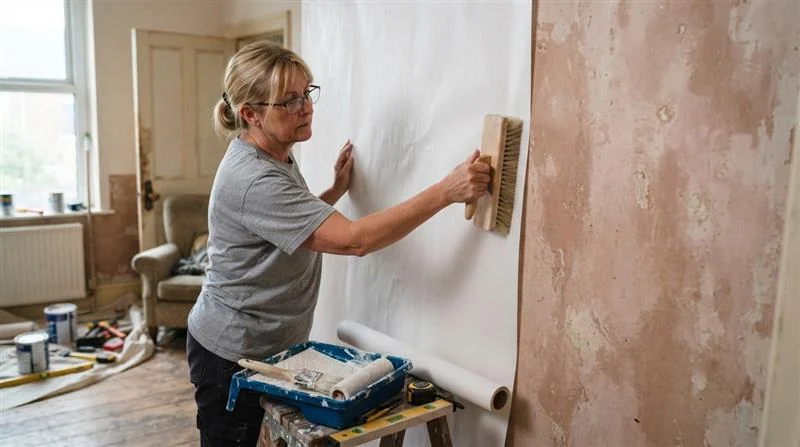
Try applying a lining paper before installing a decorative wallpaper as it will create a more consistent base and can reduce the visibility of small surface defects. Nevertheless, remember that it cannot repair unstable plaster or serious cracks, so get that fixed before.
Learning how to prepare walls for wallpaper is an important step in avoiding disappointing results. Even premium wallpaper may bubble, peel or show visible seams when applied to a dusty, damp or poorly prepared surface.
Preparation normally involves:
This all may sound like extra work, but this is the stage that determines how smooth the wallpaper will look and how long it remains secure. Skipping the preparation to save time can lead to wasted wallpaper and costly repairs later.
A simple feature wall may appear manageable, but awkward corners, repeating patterns and uneven plaster can quickly make the job frustrating. One poorly aligned strip can affect every strip that follows.
Professional preparation and installation are especially worthwhile when you have selected expensive wallpaper, grasscloth, a mural or a complicated pattern. Emporium Decorators provides professional wallpaper hanging and wallcovering services, including surface preparation, accurate pattern matching and installation across challenging areas.
Uneven walls does not mean you abandon your decorating plans. Make sure to choose the right wallcovering, deal with underlying damage and prepare the surface properly. With those details handled, wallpaper can turn a tired, imperfect wall into the feature that gives the entire room its personality.